UPVC Windows: The Complete 2026 Guide for Indian Homes
Blogs

Fabiron Exports


Complete Guide to UPVC Windows for Indian Homes

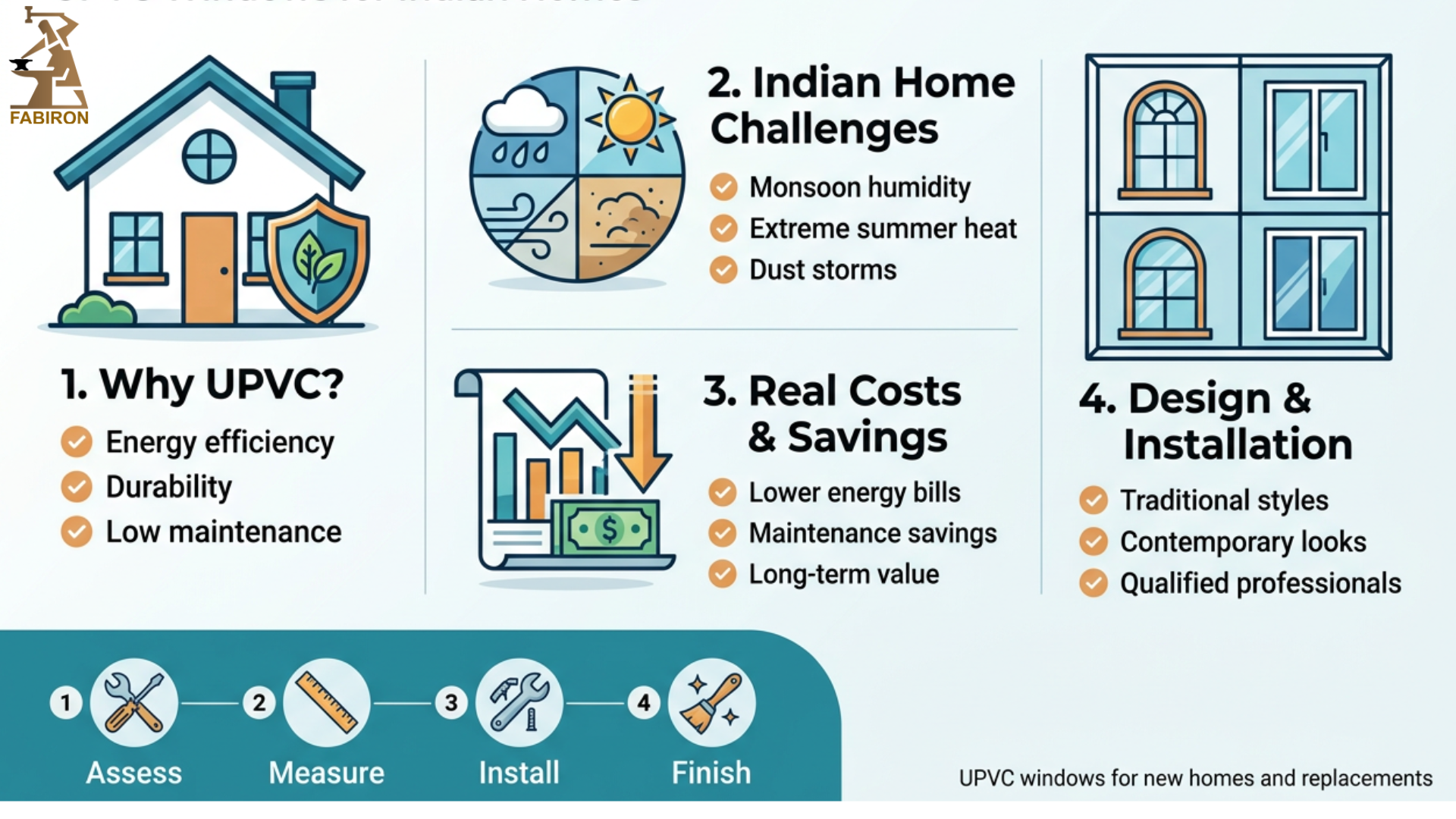
UPVC windows are becoming the go-to choice for Indian homeowners who want energy efficiency, durability, and low maintenance. This guide is for homeowners planning new construction, those looking to replace old windows, and anyone curious about upgrading to UPVC technology.

Indian homes face unique challenges - from monsoon humidity to extreme summer heat and dust storms. UPVC windows address these issues while offering long-term savings and modern aesthetics.

We'll break down the real costs and savings you can expect from UPVC windows, including energy bill reductions and maintenance savings over time. You'll also discover the various design options available, from traditional styles that complement Indian architecture to contemporary looks for modern homes. Finally, we'll walk you through the installation process so you know what to expect and how to choose qualified professionals for the job.


Understanding UPVC Windows and Their Benefits for Indian Climate

What UPVC Material Offers Over Traditional Window Materials

UPVC, or Unplasticized Polyvinyl Chloride, brings revolutionary advantages to Indian homes compared to conventional window materials like wood, aluminum, or steel. This engineered plastic compound combines strength with flexibility, creating windows that outperform traditional options in multiple ways.

Unlike wooden frames that warp, rot, or attract termites in India's humid climate, UPVC maintains its structural integrity year after year. Aluminum windows conduct heat and cold directly into your home, making rooms uncomfortable and driving up energy costs. Steel frames rust within months of monsoon exposure, requiring constant repainting and maintenance.

UPVC eliminates these problems completely. The material doesn't absorb moisture, so it won't expand or contract with weather changes. It naturally resists corrosion, pest damage, and UV degradation. Multi-chambered UPVC profiles create superior thermal barriers that keep indoor temperatures stable regardless of outside conditions.

The material's non-conductive properties mean UPVC windows don't transfer heat or cold like metal frames do. This translates to more comfortable living spaces and significantly lower electricity bills for air conditioning and heating. Color options extend beyond basic white, with wood-grain finishes and various colors that won't fade or chip over time.

Superior Insulation Properties for Extreme Temperatures

India's climate extremes demand windows that can handle scorching summers reaching 45°C and chilly winters in northern regions. UPVC windows excel in these challenging conditions through their advanced multi-chamber design and thermal break technology.

The secret lies in the air pockets trapped within UPVC frame profiles. These chambers act as natural insulators, preventing heat transfer between indoor and outdoor environments. During summer months, this barrier keeps cool air inside and hot air outside. Winter heating stays trapped indoors instead of escaping through window frames.

Temperature Benefit UPVC Windows Traditional Aluminum Wooden Windows
Heat Transfer Reduction 70-80% 15-25% 40-50%
Energy Savings 20-30% 5-10% 10-15%
Indoor Temperature Stability ±2°C ±5°C ±4°C

Double or triple glazing options enhance insulation further. Low-emissivity glass coatings reflect infrared radiation while allowing visible light through. This combination keeps rooms naturally cooler in summer and warmer in winter without constantly running air conditioners or heaters.

Quality UPVC windows maintain comfortable indoor temperatures even when outdoor conditions swing dramatically. Your home stays pleasant during afternoon heat waves and cool during unexpected temperature drops.

Resistance to Monsoon Moisture and Humidity

Monsoon seasons bring relentless moisture that destroys traditional window materials. UPVC windows stand strong against this annual challenge that affects most of India for 3-4 months yearly.

Water simply cannot penetrate properly sealed UPVC frames. The material's molecular structure repels moisture rather than absorbing it like wood. Advanced weatherstripping and drainage systems channel rainwater away from window openings, preventing leaks and water damage.

High humidity levels that cause wooden frames to swell and warp have zero effect on UPVC. The material maintains its exact dimensions regardless of moisture content in the air. This stability ensures windows continue opening and closing smoothly throughout monsoon season and beyond.

Proper UPVC window systems include:

  • Multi-point locking mechanisms that maintain tight seals
  • Drainage channels that remove water efficiently
  • Weather-resistant gaskets and seals
  • Sloped sill designs that direct water outward

Coastal areas with salt-laden air benefit enormously from UPVC's corrosion resistance. Sea salt that rapidly deteriorates metal frames cannot affect UPVC material. Beach-front properties maintain beautiful, functional windows for decades without replacement or major repairs.

Long-term Durability Against Harsh Indian Weather Conditions

Indian weather conditions test building materials like few other climates worldwide. Intense UV radiation, temperature cycling, dust storms, acid rain, and cyclonic winds create a perfect storm of destructive forces. UPVC windows are specifically engineered to thrive in these demanding conditions.

UV stabilizers built into quality UPVC formulations prevent degradation from constant sun exposure. While traditional materials fade, crack, or become brittle under India's intense sunlight, UPVC maintains its strength and appearance for 25-30 years.

The material's flexibility allows it to expand and contract with temperature changes without developing stress cracks. Daily temperature swings that destroy rigid materials like concrete or metal have minimal impact on properly installed UPVC windows.

Quality UPVC windows resist:

  • Dust storm abrasion that scratches and pits surfaces
  • Acid rain that corrodes metal components
  • Cyclone-force winds up to 200 km/h
  • Hail impact from severe thunderstorms
  • Salt corrosion in coastal environments

Comprehensive testing shows UPVC windows maintain structural integrity and weather sealing performance throughout India's harshest conditions. Independent studies demonstrate that quality UPVC installations often outlast the buildings they're installed in, providing exceptional long-term value for homeowners.

Regular inspection and basic cleaning keep UPVC windows performing optimally for decades. Unlike materials requiring frequent repairs, repainting, or replacement, UPVC delivers consistent performance year after year with minimal intervention.


Cost Analysis and Return on Investment

Initial Investment Comparison with Wooden and Aluminum Windows

UPVC windows price per sq ft typically ranges from ₹350-800, positioning them competitively against traditional options. Wooden windows cost between ₹400-1200 per square foot, while aluminum windows range from ₹250-600 per square foot.

Window Type Price Range (per sq ft) Durability Maintenance
UPVC ₹350-800 20-30 years Minimal
Wooden ₹400-1200 15-25 years High
Aluminum ₹250-600 10-20 years Moderate

Premium UPVC windows with multi-chambered profiles and superior hardware may cost more upfront, but they deliver exceptional value when you consider their lifespan and performance benefits.

Energy Savings on Air Conditioning and Heating Bills

UPVC windows dramatically reduce your monthly electricity bills through superior thermal insulation. Indian homes using UPVC windows report 15-30% lower air conditioning costs during summer months.

The multi-chambered design creates effective thermal barriers, keeping cool air inside during hot weather and preventing heat loss during winter. Double-glazed UPVC windows provide even greater energy efficiency, reducing HVAC loads by up to 40%.

Average annual savings include:

  • Air conditioning: ₹8,000-15,000 per room
  • Heating costs: ₹3,000-6,000 per room
  • Overall energy reduction: 20-35%
Maintenance Cost Reductions Over Window Lifetime

Traditional wooden windows require regular painting, polishing, and wood treatment, costing ₹2,000-5,000 annually per window. Aluminum windows need periodic seal replacement and corrosion treatment.

UPVC windows eliminate these recurring expenses:

  • No painting or staining required
  • Weather-resistant material prevents warping
  • Color remains stable for decades
  • Simple cleaning with soap and water
  • Minimal hardware replacement needs

Over a 20-year period, maintenance savings alone can reach ₹40,000-80,000 per window compared to wooden alternatives.

Property Value Enhancement Potential

Installing UPVC windows increases property resale value by 8-12%. Modern buyers specifically look for energy-efficient features, making UPVC windows a strong selling point.

Real estate experts confirm that homes with UPVC windows sell faster and command premium prices. The investment typically pays for itself within 5-7 years through energy savings and increased property value combined.

Insurance companies also offer reduced premiums for homes with UPVC windows due to their security features and weather resistance capabilities.


Design Options and Aesthetic Considerations

UPVC Windows for Indian Homes
Modern Styling Options That Complement Indian Architecture

UPVC windows have evolved beyond basic functionality to become integral design elements that enhance Indian architectural styles. Contemporary UPVC frames seamlessly blend with traditional Indian homes while offering the sleek appeal modern homeowners desire. The clean lines and minimalist profiles work exceptionally well with both colonial-era buildings and contemporary structures.

For traditional Indian homes featuring ornate stonework or intricate woodwork, UPVC windows can be designed with decorative glazing bars that echo the existing architectural details. Multi-panel configurations create visual interest while maintaining the authentic character of heritage properties. Grid patterns, arched tops, and bay window designs add character without overwhelming the original architecture.

Modern Indian homes benefit from large, uninterrupted glass panels that maximize natural light and create the illusion of larger spaces. Floor-to-ceiling configurations and sliding panel systems work particularly well in urban apartments where space optimization is crucial. UPVC windows in Jaipur have gained popularity for their ability to complement the city's mix of Rajasthani architecture and modern developments, offering homeowners versatile design solutions.

Color and Finish Varieties Available in the Indian Market

The Indian UPVC market offers an extensive palette of colors and finishes designed specifically for local preferences and climate conditions. Classic white remains the most popular choice due to its versatility and heat-reflective properties, but homeowners now have access to sophisticated alternatives.

Wood-grain finishes have revolutionized UPVC aesthetics, providing the warmth of natural timber without maintenance concerns. These textured surfaces resist fading under intense Indian sunlight and offer authentic wood appearances in teak, mahogany, oak, and walnut variants. The laminated films used create realistic grain patterns that fool even close inspection.

Popular solid colors include:

  • Cream and ivory for traditional homes
  • Grey and charcoal for contemporary designs
  • Brown and bronze for earthy, natural aesthetics
  • Green for homes emphasizing environmental harmony

Dual-color options allow different interior and exterior finishes, enabling homeowners to maintain neighbourhood aesthetic consistency while personalizing interior spaces. UPVC windows in Kota showcase this trend, where residents often choose traditional exterior colors while opting for modern interior finishes.

Special finishes like matte, glossy, and textured surfaces provide additional customization options. Anti-fade technology ensures colors remain vibrant despite prolonged UV exposure.

Customization Possibilities for Different Home Styles

UPVC windows offer remarkable customization flexibility, allowing homeowners to create unique solutions for diverse architectural requirements. Custom sizing accommodates non-standard openings common in Indian construction, while specialized hardware options enhance both function and appearance.

Traditional Indian homes benefit from custom arched tops, decorative transoms, and multi-light configurations that respect historical design principles. Jali-inspired perforation patterns can be incorporated into solid panels, creating privacy while maintaining airflow. Custom mullion designs replicate traditional window styles while providing modern performance.

Contemporary homes leverage UPVC's structural capabilities for large expanses of glass. Corner windows, ribbon windows, and curtain wall systems create dramatic architectural statements. Integrated blinds within double-glazed units offer clean aesthetics and enhanced privacy control.

Hardware customization includes:

  • Handle styles ranging from traditional to ultra-modern
  • Security features like multi-point locking systems
  • Opening mechanisms including tilt-and-turn, casement, and sliding options
  • Ventilation controls with built-in trickle vents

Glass options extend customization possibilities with frosted, tinted, and decorative variants. Smart glass technology integration allows electronically controlled transparency, while energy-efficient coatings optimize thermal performance for specific climatic zones across India's diverse geography.


Installation Process and Professional Requirements

Pre-installation Measurements and Site Preparation

Getting accurate measurements is absolutely critical for a smooth UPVC window installation. Professional installers will visit your home to take precise measurements of each window opening, accounting for any irregularities in the wall structure. They'll measure width, height, and depth at multiple points since older Indian homes often have slight variations in opening sizes.

Site preparation involves several key steps. The installer needs to assess the existing window frames and determine removal requirements. For older wooden or steel frames, they'll check for structural damage or termite issues that might affect the new installation. The surrounding walls should be inspected for cracks, moisture damage, or uneven surfaces that could impact the window's fit.

Essential preparation checklist:

  • Clear the area around windows of furniture and belongings
  • Ensure electrical connections near windows are safely covered
  • Arrange for debris removal after old frame extraction
  • Check weather forecast to avoid installation during monsoon
  • Verify delivery access for new window units
Finding Certified UPVC Window Installers in India

Choosing the right installer makes the difference between a perfect fit and years of problems. Start by researching manufacturers' authorized dealer networks, as they typically maintain higher installation standards and offer better warranties.

Key credentials to verify:

  • Manufacturer certification and training completion
  • Valid business license and insurance coverage
  • Minimum 3-5 years of UPVC installation experience
  • Portfolio of completed residential projects
  • Customer references from recent installations

Check online reviews across multiple platforms like Google, Sulekha, and Urban Company. Pay attention to feedback about punctuality, cleanliness, and post-installation support. Local building material suppliers often recommend reliable installers they work with regularly.

Get quotes from at least three different installers. Be wary of prices that seem too low, as this often indicates corner-cutting or use of inferior materials. A detailed quote should break down material costs, labor charges, and any additional services like old frame disposal.

Timeline Expectations and Installation Best Practices

Typical UPVC window installation timelines vary based on home size and complexity. For a standard 2-3 bedroom apartment, expect 2-4 days for complete installation. Larger homes or those requiring custom-sized windows may take up to a week.

Standard installation process:

  • Day 1: Remove existing windows, clean openings, make structural adjustments
  • Day 2-3: Install new UPVC frames, fit glass panels, adjust hardware
  • Final day: Complete weatherproofing, install accessories, conduct final testing

Weather plays a crucial role in installation timing. Avoid scheduling during heavy monsoon periods as moisture can affect sealant curing and create alignment issues. The best time is during dry months when installers can work efficiently without weather interruptions.

Quality installers follow specific best practices. They use proper lifting equipment to handle large window units safely, apply weatherproof sealants correctly, and ensure all moving parts operate smoothly before completion. Professional teams typically include 2-3 skilled workers to maintain efficiency and safety standards.

Quality Checks and Post-installation Testing

Thorough quality checks protect your investment and ensure long-term performance. Start by inspecting each window's alignment - they should sit perfectly square in their frames without gaps or binding when opening and closing.

Critical inspection points:

  • Smooth operation: All windows should open, close, and lock effortlessly
  • Weather sealing: Check for drafts around all edges using a lit candle or incense stick
  • Water resistance: Test with gentle water spray during installation
  • Hardware functionality: Verify all locks, handles, and hinges work properly
  • Glass integrity: Look for chips, cracks, or installation stress marks

Professional installers should demonstrate each window's operation and explain maintenance requirements. They'll typically provide a checklist showing completed quality checks and any adjustments made during installation.

Request a final walkthrough where the installer addresses any concerns immediately. Document any issues in writing before signing off on the work. Reputable companies offer 24-48 hour callback periods to address minor adjustments that might become apparent after the first day of use.

Keep all warranty documentation and installer contact information easily accessible for future reference.


Maintenance and Care Guidelines

Simple Cleaning Routines for Optimal Performance

Regular cleaning keeps your UPVC windows looking great and functioning smoothly for years. Start with the frames - use warm water mixed with a few drops of mild dish soap. Avoid harsh chemicals or abrasive cleaners that can damage the surface. A soft cloth or sponge works perfectly for wiping down the frames, paying special attention to corners where dirt tends to accumulate.

For the glass panels, standard glass cleaners work fine, but newspaper or microfiber cloths give you streak-free results. Clean the drainage holes at the bottom of the frame monthly - these small openings prevent water buildup and should stay clear of debris.

The window tracks deserve extra attention since they collect dust, leaves, and insects. Use an old toothbrush to scrub out stubborn dirt, then vacuum the loose debris. A weekly wipe-down prevents major buildup that could affect window operation.

Hardware Maintenance and Lubrication Schedules

Window hardware needs regular care to maintain smooth operation. Check hinges, handles, and locking mechanisms every three months for signs of wear or stiffness. Apply a small amount of white lithium grease or 3-in-1 oil to moving parts - just a drop or two prevents over-lubrication that attracts dirt.

Pay attention to the multi-point locking system found in most UPVC windows. These mechanisms have several contact points that need occasional lubrication. Test the handle operation monthly - it should move easily without forcing. Tighten loose screws on handles and hinges before they become bigger problems.

Door and window seals also need inspection every six months. Look for cracks, hardening, or gaps that could let in drafts or moisture. Quality seals typically last 8-10 years but may need earlier replacement in extreme weather conditions.

Seasonal Care Tips for Monsoon and Summer Months

India's intense weather patterns require specific maintenance approaches. Before monsoon season arrives, clear all drainage channels and inspect seals around the frame. Water should flow freely out of the window system - blocked drainage causes serious problems including frame damage and interior flooding.

Check the caulking around window frames for gaps or cracks where monsoon rains might penetrate. Fresh caulk costs little but prevents expensive water damage repairs later.

During summer months, extreme heat can affect UPVC expansion and contraction. Avoid slamming windows shut when temperatures soar - the material needs room to move naturally. Keep curtains or blinds closed during peak sun hours to reduce heat stress on the frames.

Summer dust storms common in northern India require more frequent cleaning. A monthly deep clean during dusty seasons keeps windows operating smoothly and looking clear.

When to Call Professionals for Repairs

Some maintenance tasks require professional expertise. Call a technician if windows become difficult to open or close despite regular lubrication. This usually indicates worn hardware or frame alignment issues that need proper tools and experience to fix safely.

Broken glass obviously needs professional replacement, but also watch for foggy double-glazed units. Condensation between glass panes means the seal has failed and the entire unit needs replacement.

If you notice gaps around the frame or feel drafts even when windows are closed, the installation may have shifted. Professional re-adjustment ensures proper sealing and security. Water leaks during heavy rains also warrant immediate professional attention to prevent structural damage to your home.


Choosing the Right UPVC Windows for Your Indian Home

Evaluating Different Profiles and Thickness Options

Profile thickness directly impacts your window's durability and thermal performance. Standard UPVC profiles range from 70mm to 88mm, with thicker profiles offering better insulation and structural strength. For Indian homes, 70-80mm profiles work well for most applications, while areas with extreme weather conditions benefit from 88mm profiles.

Multi-chamber profiles create air pockets that enhance thermal efficiency. Look for profiles with 3-5 chambers - more chambers mean better insulation but also higher costs. The wall thickness of the profile should be at least 2.5mm for outer walls and 2.0mm for inner walls to ensure longevity.

Consider the profile's reinforcement system too. Steel reinforcement adds structural integrity, especially for larger window sizes common in modern Indian homes. Some manufacturers offer galvanized steel reinforcement that prevents corrosion in humid coastal areas.

Glass Selection for Security and Energy Efficiency

Double glazing is becoming the standard for Indian homes, offering superior thermal insulation compared to single pane glass. The air gap between glass panes typically ranges from 12-20mm, with 16mm being optimal for most climates.

For security, consider laminated glass options. These consist of two glass sheets bonded with a plastic interlayer that holds the glass together if broken. This prevents easy break-ins while maintaining optical clarity.

Low-E (low emissivity) coatings reflect heat while allowing light to pass through. This technology can reduce heat gain by up to 40%, making it valuable for south and west-facing windows in hot climates. Argon gas filling between panes further improves thermal performance.

Glass Type Benefits Best For
Double Glazed Clear Basic insulation, cost-effective Moderate climates
Low-E Double Glazed Energy efficiency, heat reflection Hot sunny areas
Laminated Security, UV protection Ground floor, security concerns
Tinted Glare reduction, privacy Bedrooms, bathrooms
Hardware Quality Assessment Criteria

Window hardware determines functionality and longevity. Quality hinges should support the window weight without sagging over time. Look for stainless steel or zinc-coated hardware that resists corrosion in humid Indian conditions.

Multi-point locking systems provide better security than traditional single-point locks. These engage the window at multiple points along the frame, making forced entry significantly harder. German and Italian hardware brands typically offer superior quality and smooth operation.

Check the opening mechanism carefully. Tilt-and-turn functionality allows windows to open inward from the top for ventilation or swing open completely for cleaning. This versatility makes maintenance easier in multi-story buildings.

Handle quality matters more than you might think. A good handle should feel solid, operate smoothly, and include a locking feature for child safety. Cheap handles break frequently and compromise security.

Brand Reputation and Warranty Considerations

Established UPVC window manufacturers offer comprehensive warranties covering profile, hardware, and glass components. Look for minimum 10-year warranties on profiles and 5-year warranties on hardware. Some premium brands provide up to 25-year warranties.

Research the manufacturer's local presence and service network. Brands with strong dealer networks and service centers in your region provide better after-sales support. This becomes crucial when you need replacement parts or repairs years later.

Customer reviews and case studies reveal real-world performance. Check online forums, social media groups, and ask for references from the manufacturer. Pay attention to feedback about color fading, seal failure, and hardware durability.

Certification standards matter significantly. Look for ISI certification for Indian markets and additional certifications like IGCC (Indian Green Building Council) ratings for energy efficiency. These ensure the products meet local building codes and performance standards.

Consider the company's financial stability and market presence. Well-established companies are more likely to honor long-term warranties and provide consistent product availability for future replacements or additions.

UPVC windows have proven themselves as a smart choice for Indian homeowners dealing with extreme weather, humidity, and pollution. From their excellent thermal insulation that cuts down electricity bills to their impressive durability against monsoons and scorching heat, these windows offer real value for your money. The initial investment pays off through energy savings, minimal maintenance needs, and long-lasting performance that can span decades.

When selecting UPVC windows for your home, focus on quality over price, work with certified installers, and choose designs that complement your home's architecture while meeting your specific climate needs. With proper installation and basic care, your UPVC windows will keep your family comfortable year-round while adding value to your property. Take time to research local suppliers, compare warranties, and invest in this upgrade that will benefit your home for years to come.


FAQs

1. What exactly are UPVC windows?

UPVC windows are modern window frames made from a strong and durable material called Unplasticized Polyvinyl Chloride (UPVC). Unlike traditional wooden frames, they do not absorb moisture, rust, or rot. This makes them a practical choice for Indian homes that face extreme heat, heavy rain, dust, and humidity throughout the year.

2. Why are UPVC windows becoming so popular in India?

Many homeowners are choosing UPVC windows because they offer a great balance of durability, comfort, and low maintenance. They help keep homes cooler during summer, reduce outside noise, and stay in good condition for years without frequent repairs or repainting.

3. Do UPVC windows require a lot of maintenance?

Not at all. One of the biggest advantages of UPVC windows is that they are very easy to maintain. A simple wipe with a soft cloth and mild soap solution is usually enough to keep them clean. Unlike wooden windows, there is no need for regular painting, polishing, or termite treatment.

4. Can UPVC windows help reduce electricity bills?

Yes, they can. UPVC windows provide excellent thermal insulation, which helps maintain a comfortable indoor temperature. As a result, your air conditioner or heater doesn't need to work as hard, which may help lower energy consumption over time.

5. Are UPVC windows effective at reducing outside noise?

Yes. UPVC windows are known for their sound-insulating properties. When paired with quality glass and proper sealing, they can significantly reduce traffic noise, construction sounds, and other disturbances, making your home quieter and more peaceful.

6. Are UPVC windows better than wooden windows?

For most Indian homes, UPVC windows are often a more practical option. They do not suffer from termite attacks, swelling, or moisture damage like wood can. They also require much less maintenance while offering excellent insulation and long-term durability.

7. Are UPVC windows worth the investment?

Yes, most homeowners consider them a worthwhile long-term investment. Although the initial cost may be higher than some traditional window options, the benefits of durability, energy efficiency, noise reduction, and low maintenance often provide better value over the years.